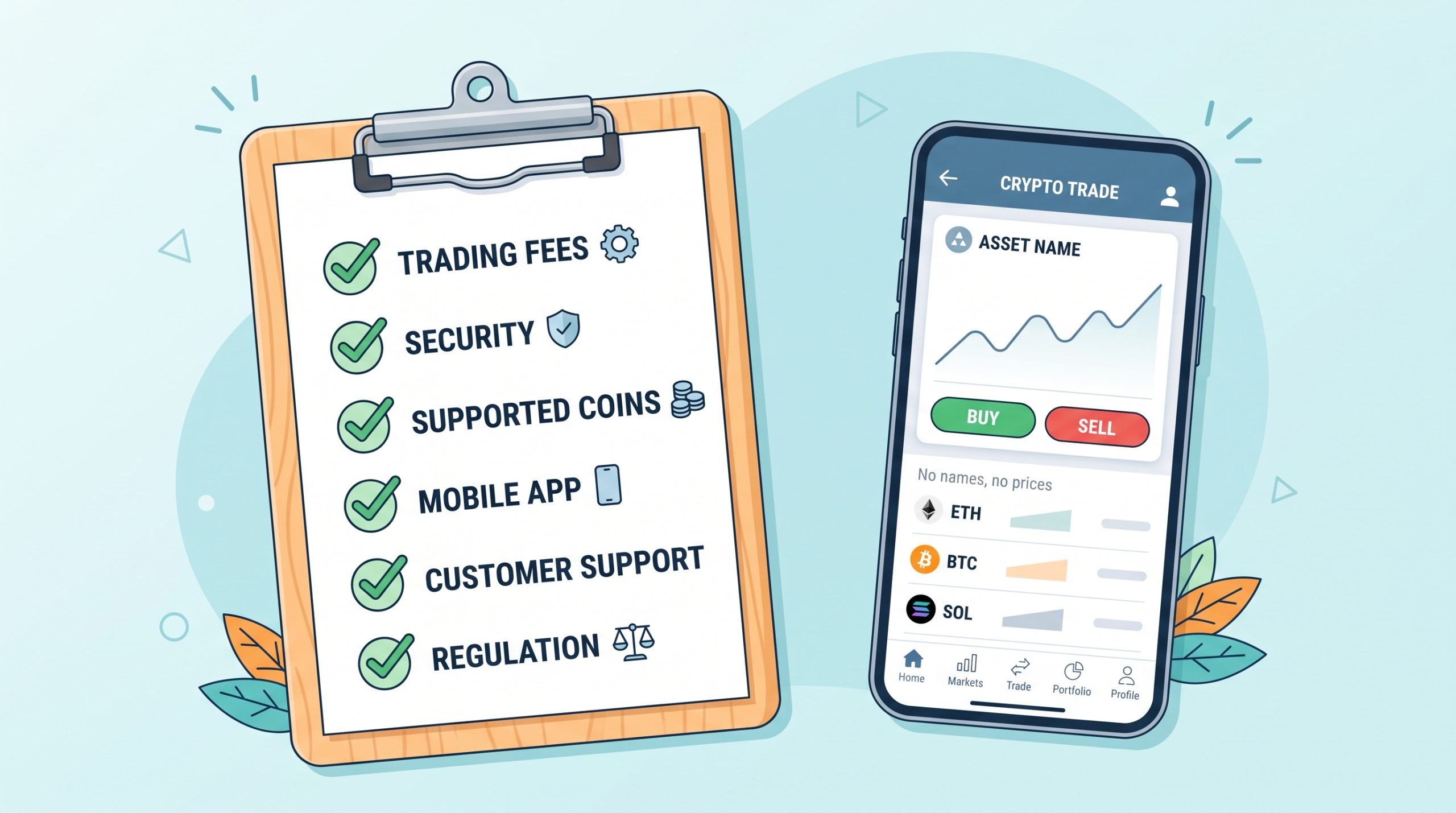
Ready to explore the world of cryptocurrency trading? The exchange or app you choose shapes almost everything about the experience: the fees you pay, the coins you can access, how easily you can trade from your phone, and how well your funds are protected. This guide brings together what leading reviewers currently rate as the best crypto exchanges and apps, then walks through the criteria you can use to judge any platform for yourself.
What Leading Reviewers Rate as the Best Crypto Exchanges and Apps
Several established finance publications maintain regularly updated exchange rankings, and their latest lists show notable agreement at the top.
Investopedia’s roundup of the best crypto exchanges and apps for September 2026 names Kraken as best overall and Coinbase as best for beginners. The same guide singles out Gemini as best for security and best for experienced traders, and Crypto.com as best for mobile and best for Bitcoin.
NerdWallet’s 2026 ranking of crypto exchanges, platforms, and apps reaches similar conclusions: it lists Kraken as the best overall crypto platform, Coinbase as the best crypto exchange for beginners, and Uphold as the best crypto exchange for staking.
Forbes Advisor’s 2026 review of crypto exchanges and apps takes a different view of the top spot. It says its testing determined that Coinbase Exchange is the best overall crypto exchange, earning a 5-star rating from its research team.
Kraken and Coinbase appear across multiple of these 2026 rankings, which makes them natural starting points for your own shortlist. The right choice for you still depends on your priorities, whether that is low fees, beginner-friendly design, staking, security, or a strong mobile app.
Rankings by Size and Trading Activity
Reviewer scores are one lens; market data is another. CoinMarketCap ranks cryptocurrency exchanges by volume, and its list includes Binance, Coinbase Pro, Huobi, Kraken, Bithumb, and Bitfinex. CoinGecko, which ranks exchanges by trust score, reports that the 3 largest cryptocurrency exchanges are currently Binance, Coinbase Exchange, and Kraken. Volume-based rankings tell you where trading activity concentrates, not whether a platform suits your experience level, so read them alongside the reviewer lists above.
How to Choose a Crypto Exchange or App
Whichever names end up on your shortlist, the same core factors should drive the final decision.
- Trading fees. Exchanges charge fees for trading, and fee structures vary significantly between platforms. Compare them against your trading habits and budget, and review the terms and conditions carefully, because some platforms carry hidden fees or charges.
- Ease of use and mobile experience. A simple, intuitive interface makes it easier to navigate and trade, and a robust mobile app lets you monitor your portfolio and trade wherever you are.
- Security measures. Look for platforms with strong protections such as two-factor authentication, encryption, and cold storage for funds.
- Range of supported cryptocurrencies. Different exchanges support different coins, so confirm the assets you want to trade are available before you sign up.
- Customer support. Responsive and knowledgeable support matters, especially if you are new to crypto trading and need help when issues come up.
- Regulatory compliance. Choose a platform that operates within the legal framework of your jurisdiction. Licensed and regulated platforms provide an added layer of security and accountability.
Security Essentials Before You Deposit
Platform security and personal security work together. Beyond choosing an exchange with solid protections, these practices keep your own holdings safer:
- Enable two-factor authentication. This requires a second verification step, such as a unique code sent to your mobile device, in addition to your password.
- Use cold storage for long-term holdings. Keeping private keys offline makes them less vulnerable to hacking attempts and online threats. Hardware wallets such as Ledger or Trezor provide offline storage and encryption for your private keys.
- Consider a multi-signature wallet. Requiring multiple private keys to authorize transactions reduces the risk of unauthorized access.
- Keep backup and recovery options in place. This lets you retrieve your funds in case of loss or device failure.
Custodial vs. Non-Custodial Wallets
Where your keys live is as important as where you trade. Custodial wallets hold your private keys on your behalf, sacrificing some control in exchange for convenience. Non-custodial wallets give you full control over your keys but require more responsibility from you. The choice between the two depends on your preferences and risk tolerance.
Final Thoughts
The current reviewer consensus gives you a strong starting shortlist, but the best platform is the one that fits how you actually trade. Match an exchange’s fees, security measures, supported coins, and customer support to your own needs, verify that it operates within the rules of your jurisdiction, and lock down your account with two-factor authentication before you fund it. A well-reviewed platform combined with disciplined personal security is what turns an exciting market into a manageable one.