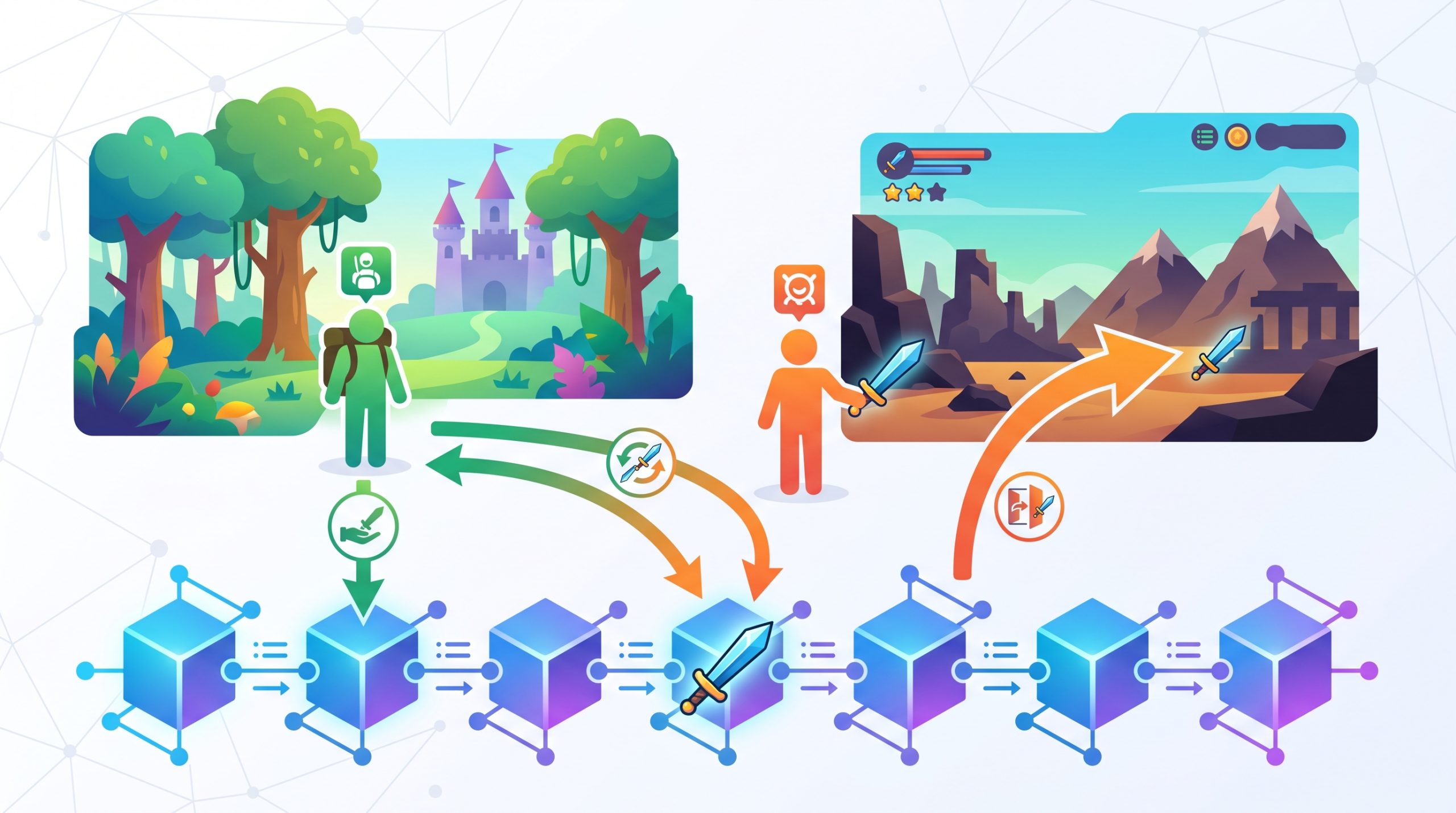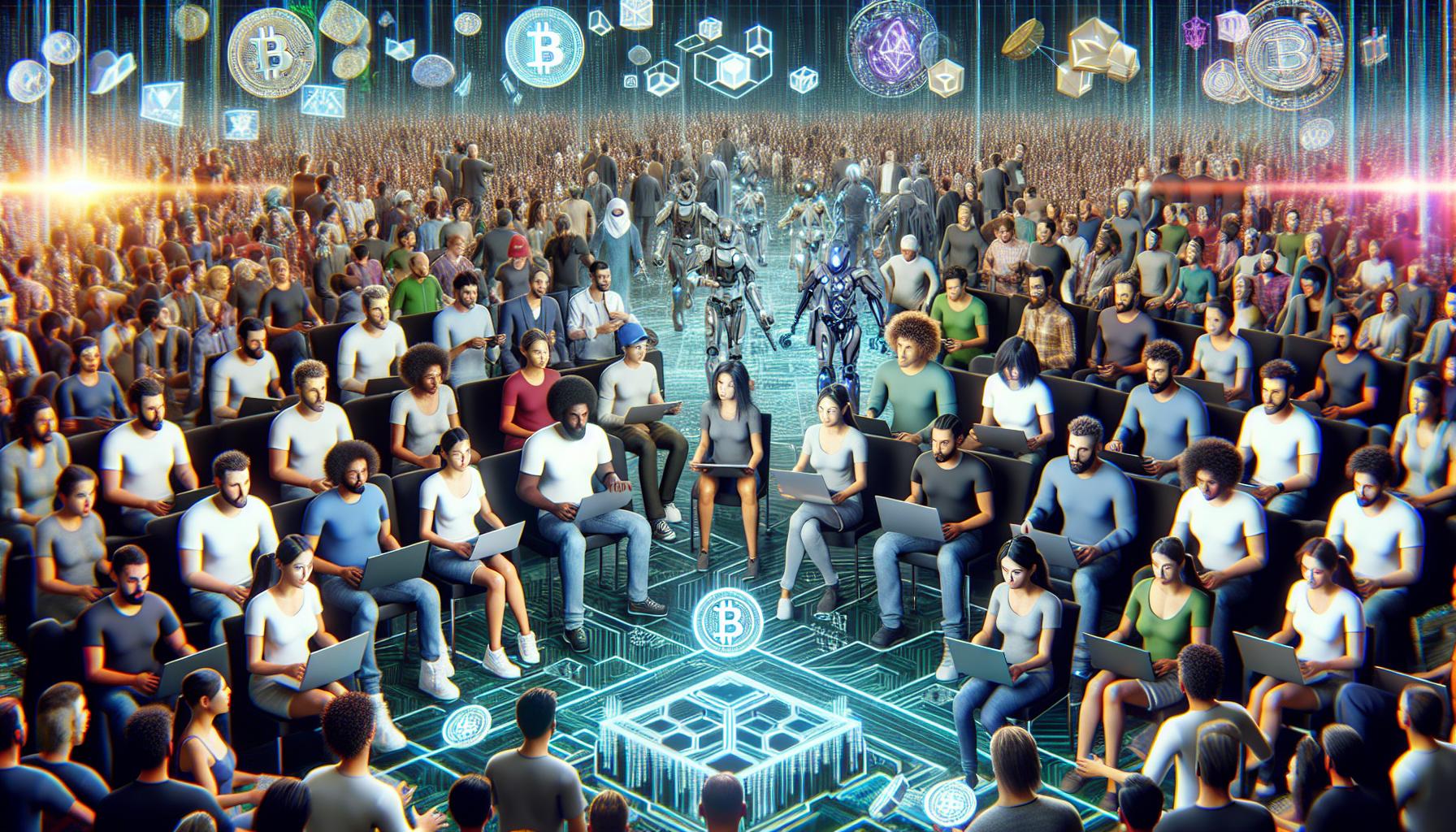

Seamless crypto gaming is where virtual worlds and digital currencies meet. Instead of tedious, convoluted processes, you can buy, sell, and trade virtual assets using cryptocurrencies directly inside the game itself. Just as importantly, you keep real ownership of what you earn: rather than losing hard-earned items or having them locked inside one game’s ecosystem, blockchain technology gives you a transparent, secure record of your assets that can be transferred or traded with other players.
This model creates possibilities on both sides of the screen. Developers can build dynamic, evolving game worlds, while players enjoy an experience where their actions carry real-world value.
What Is Seamless Crypto Gaming?
Seamless crypto gaming combines virtual worlds and digital currencies so players can buy, sell, and trade in-game assets using cryptocurrencies within the game. The broader category is often called blockchain gaming; Chainlink’s education resources describe a blockchain game as any game that uses blockchain technology to enhance or rearchitect traditional video games.
At its core, this approach relies on blockchain: a decentralized ledger that records transactions in a transparent and immutable way. Because ownership and transactions are verifiable on the blockchain, players can truly own their in-game assets and transfer or trade them with other players, which changes how the industry can handle fraud and theft risk.
The other defining shift is real-world value. In traditional gaming, the time players invest in acquiring virtual assets often holds little value outside the game. In seamless crypto gaming, in-game achievements can become tradeable assets, giving players ways to monetize their skills. Developers, in turn, can design in-game economies that mirror real-world economies, adding depth that attracts players looking for more than entertainment alone.
The Benefits of Seamless Crypto Gaming
True Ownership of Virtual Assets
In traditional games, players may spend hours accumulating and customizing items yet have limited control over them. With seamless crypto gaming, ownership sits with the player. Each asset is represented on the blockchain, so it can be bought, sold, or traded within the game, and rare items or skilled play can translate into economic opportunity.
Transparent and Secure Transactions
Every transaction is recorded on an immutable ledger, which makes unauthorized changes very difficult and lets players verify the ownership and history of any virtual asset. That transparency also helps developers build trust by demonstrating the game runs on a fair, verifiable platform.
Dynamic Game Worlds
Because assets and economies live on open infrastructure, developers can create worlds where players shape the environment and influence the overall experience. Players become active participants in a game’s evolution, which deepens engagement and opens new paths for design and storytelling.
How Blockchain Technology Enables Seamless Crypto Gaming
- Transparency and security: transactions are recorded on a decentralized ledger, making them very hard to alter or manipulate and easy to verify.
- True ownership: virtual assets are represented as unique tokens that cannot be replicated, so players are not dependent on a developer’s goodwill to keep what they own.
- Ease of transfer and trade: token ownership can move between players without intermediaries, supporting a vibrant virtual economy.
- Interoperability: blockchain-based assets can potentially be used across multiple games or platforms, breaking down barriers between gaming ecosystems.
Owning Your In-Game Assets
Unlike traditional gaming, where virtual items are ultimately controlled by the developer or publisher, blockchain lets players hold their assets directly. Each item is a unique, tamper-evident token with a transparent history of ownership, which removes doubts about authenticity or scarcity.
Ownership on the blockchain also changes the risk picture. Traditional gaming accounts can be vulnerable to hacking or server shutdowns that wipe out valuable items. With blockchain, your assets are recorded on a decentralized ledger rather than living solely on a single game’s servers, and interoperability means an item from one game could, in principle, be used in another.
The Future of Seamless Crypto Gaming
- Player-driven economies: full ownership and control of in-game assets supports peer-to-peer buying, selling, and trading, letting players create real value from their skills and collections.
- Cross-game compatibility: interoperable assets that work across games or platforms add convenience and reward long-term engagement.
- Decentralized gameplay: platforms operating on distributed networks could reduce dependence on a central authority, giving players more autonomy and reducing risks of censorship and unfair practices.
- Security and transparency: transactions recorded and verified across a network of computers are very difficult to manipulate, supporting trust between players and developers.
- Non-fungible tokens (NFTs): unique digital assets can represent rare or collectible items such as skins, characters, or virtual real estate, adding scarcity and a sense of exclusive ownership.
Conclusion
Seamless crypto gaming points toward a gaming industry built on player-driven economies, cross-game compatibility, decentralized gameplay, verifiable transactions, and NFTs. Players can own and trade what they earn, developers can build richer economies, and the transparency of the underlying ledger supports trust across the community. As the technology evolves, expect the space to keep transforming how we play and interact with games.
Frequently Asked Questions
What is the future of seamless crypto gaming?
It centers on blockchain technology: player-driven economies, cross-game compatibility, decentralized gameplay, verifiable transactions, and NFT integration, giving players ways to monetize skills and assets and a stronger sense of ownership.
How does blockchain technology benefit seamless crypto gaming?
Game assets and transactions are recorded and verified immutably on a decentralized network, which supports transparency and makes fraud harder. Smart contracts and NFTs also enable player-driven economies and customization.
What is a player-driven economy in crypto gaming?
An ecosystem where players control their in-game assets and those assets’ economic value. Blockchain lets players trade, sell, and own virtual assets transparently, creating opportunities to earn real-world value.
How does cross-game compatibility work?
Standardized protocols for asset ownership and transferability let the same digital assets be used across multiple games, increasing the value and versatility of a player’s virtual possessions.
What are non-fungible tokens (NFTs) in crypto gaming?
NFTs are unique digital assets on a blockchain. Unlike cryptocurrencies such as Bitcoin or Ethereum, each NFT represents a distinct item that cannot be swapped like-for-like. In gaming, NFTs can represent items, artwork, or virtual property that players can buy, trade, and sell.